


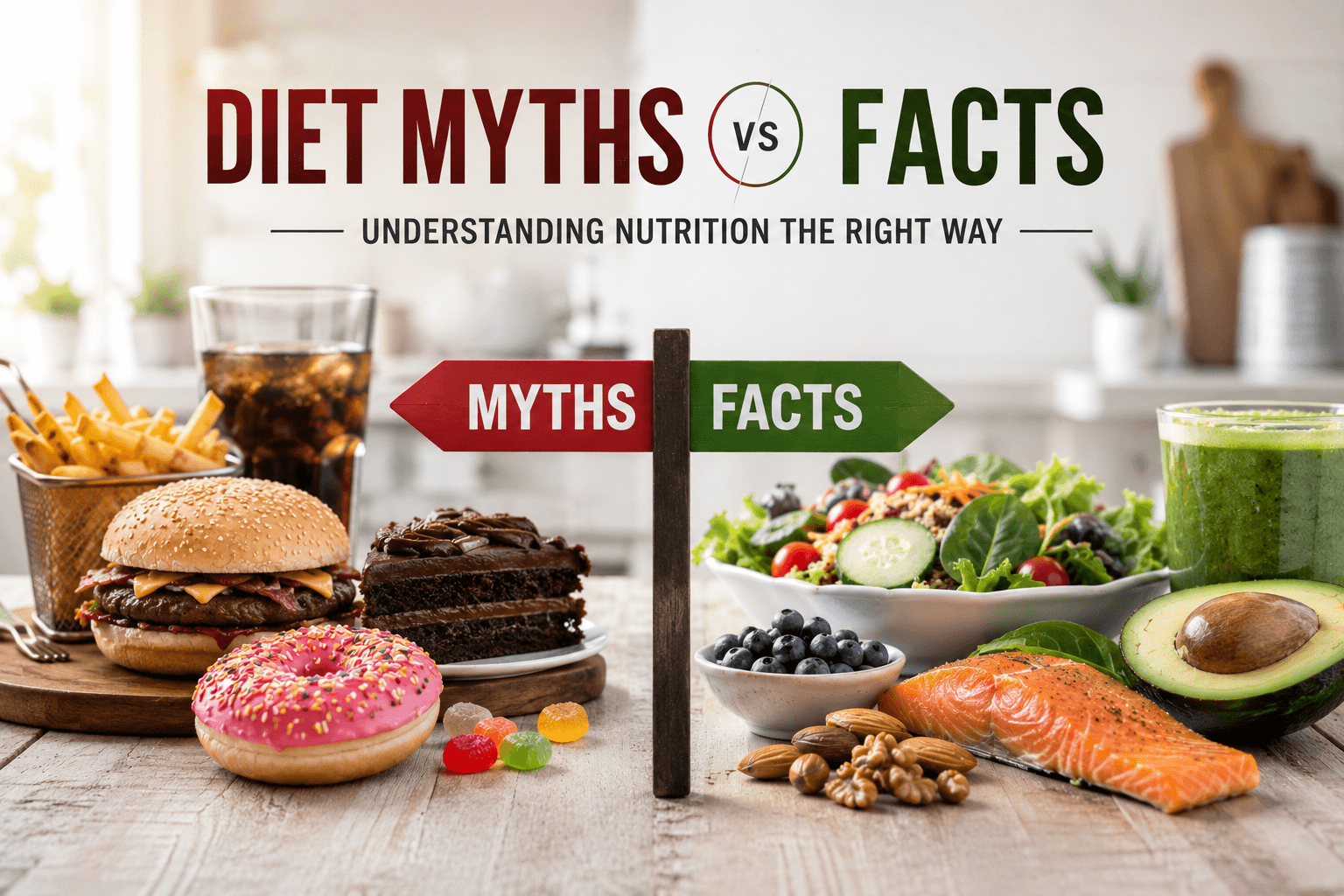
There is a lot of confusion around food and nutrition today. Social media, quick fixes, and trendy diets often make it difficult to know what is actually healthy. Let’s clear up some common diet myths with simple, science-based facts.
Myth 1: Carbs Make You Gain Weight
Fact: Carbohydrates are not the real problem. Eating more calories than your body needs is what leads to weight gain.
Healthy carbohydrates like whole grains, fruits, vegetables, oats, dal, and millets provide energy, fiber, vitamins, and minerals. Instead of completely avoiding carbs, focus on choosing better quality carbs and eating them in the right portions.
Myth 2: All Fats Are Bad for Health
Fact: Your body actually needs healthy fats to function properly.
Good fats help support brain health, hormones, heart health, and absorption of vitamins. Foods like nuts, seeds, avocado, olive oil, and fatty fish contain beneficial fats. The real concern is excess intake of trans fats and highly processed fried foods.
Myth 3: Juice Cleanses Detox the Body
Fact: Your body already has a natural detox system through the liver and kidneys.
Juice cleanses often lack protein, fiber, and important nutrients. Depending only on juices for several days may leave you feeling weak and tired. Instead of detox diets, focus on balanced meals, enough water, fruits, vegetables, and regular physical activity.
Myth 4: Eating at Night Causes Weight Gain
Fact: Weight gain depends more on total food intake and food choices than on timing alone.
Late night eating becomes a problem mainly when people consume large amounts of processed snacks, sweets, or fast food mindlessly. If you are genuinely hungry at night, choose healthier options like fruit, curd, nuts, or buttermilk.
Myth 5: Skipping Meals Helps in Weight Loss
Fact: Skipping meals can often make weight management more difficult.
When you stay hungry for long hours, it may slow down energy levels and increase cravings later in the day. This often leads to overeating. Regular balanced meals help maintain steady energy, better appetite control, and improved metabolism.
Myth 6: Fresh Fruits and Vegetables Are Always Better Than Frozen
Fact: Frozen fruits and vegetables can be just as nutritious as fresh ones.
Many frozen foods are preserved at peak freshness, which helps retain nutrients. They are also convenient, budget friendly, and useful when certain fruits or vegetables are not in season.
Myth 7: High Protein Diets Damage the Kidneys
Fact: High protein intake is generally safe for healthy individuals.
Protein is important for muscle repair, immunity, recovery, and overall health. However, people who already have kidney disease may need to monitor their protein intake under medical guidance. Balance is always important.
Myth 8: Gluten Free Diets Are Healthier for Everyone
Fact: A gluten free diet is only necessary for people with celiac disease or gluten sensitivity.
For most healthy individuals, whole grains containing gluten can be part of a nutritious diet. Many packaged gluten free foods are highly processed and may contain less fiber and nutrients.
Conclusion
Good nutrition is not about following trends or completely avoiding certain foods. A healthy diet is built on balance, variety, moderation, and consistency. Focus on simple home cooked meals, mindful eating, and evidence-based nutrition choices that support long term health.