


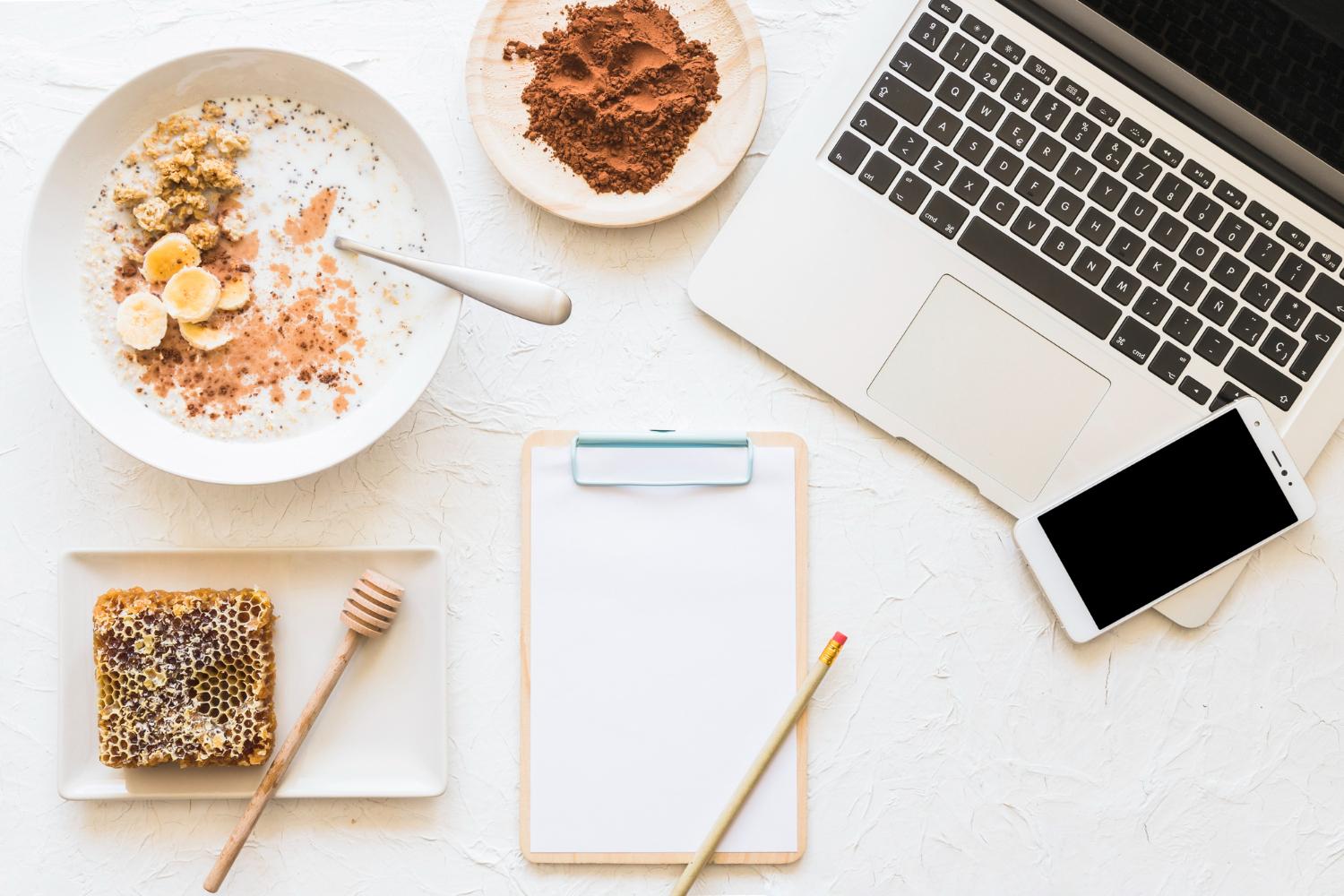
I have had this exact conversation hundreds of times. Someone comes to me exhausted, struggling to concentrate after noon, reaching for coffee or biscuits every two hours, and wondering why they feel so drained by 5 PM. When I ask them to walk me through what they eat during a workday, the answer is almost always the same. A rushed breakfast, maybe. A meal squeezed between two back to back calls. Or nothing at all until dinner.
Here is the truth that most busy professionals do not hear enough: the way you eat during your workday is directly connected to how well your brain works, how steady your energy is, and whether you feel sharp or foggy by mid-afternoon. It is not about willpower or discipline. It is about biology. And once you understand that, eating better at your desk becomes surprisingly simple.
Why the 3 PM Crash Happens
Your brain runs almost entirely on glucose. Not chocolate or coffee, but steady, slow releasing glucose from real food. When you skip meals, eat something heavy and starchy on an empty stomach, or go more than four to five hours without eating, your blood sugar drops. That drop is what causes the 3 PM wall. The fatigue, the inability to concentrate, the sudden intense craving for something sweet or salty. Your body is simply asking for fuel.
The solution is not to eat more. It is to eat smarter, more consistently, and with a little more intention than most of us manage on a busy workday.
Start the Day Before You Open Your Laptop
I cannot stress this enough. Breakfast is not optional when you have a demanding mental workload. Your brain has been fasting all night. If you sit down at your desk without eating, you are essentially asking it to perform under a shortage.
What works well is a breakfast that combines protein, healthy fat, and some complex carbohydrate. This combination releases energy slowly and keeps you mentally sharp well into late morning. Some practical options that take under ten minutes to put together:
Two eggs with a whole wheat toast and a small bowl of fruit. A bowl of overnight oats with nuts, seeds, and curd. Poha or upma with a handful of groundnuts and a glass of buttermilk. Whole grain roti with peanut butter or a boiled egg. Even a thick smoothie made with banana, curd, oats, and a spoon of nut butter travels well and takes three minutes to prepare.
whatever you choose, eat it sitting down, away from your screen. Even ten minutes of unhurried breakfast makes a measurable difference to your morning focus.
Desk Lunches That Actually Work
If you are someone who regularly eats at your desk, the goal is to make that meal work for you rather than against you. A heavy, oily, carbohydrate loaded lunch is one of the fastest ways to trigger afternoon sluggishness. It sends a large amount of glucose into your blood at once, your body responds with a large insulin release, and within ninety minutes you feel like you could fall asleep.
A desk lunch that keeps you productive looks more like this. A moderate portion of grains or roti, a generous portion of dal or sabzi with protein, plenty of cooked vegetables, and a small bowl of curd or raita. If you are ordering in, look for grilled or baked options over fried, choose meals with visible vegetables, and skip the extra naan or rice that often comes automatically.
One habit I recommend to every corporate client: eat your vegetables and protein first, then move to the grains. This small sequencing change has been shown to reduce the post meal glucose spike significantly. It costs nothing and takes zero extra time.
Smart Snacks to Keep at Your Desk
Snacking at a desk gets a bad reputation, usually because of the biscuits, chips, and chocolate that end up there by default. But strategic snacking is genuinely useful when your meals are spaced more than four to five hours apart. The key is having the right things within reach before you get hungry.
These are snacks I routinely recommend to working professionals:
A small handful of mixed nuts. Almonds, walnuts, and cashews are rich in healthy fat and protein. They satisfy hunger without spiking blood sugar and require zero preparation.
A boiled egg or a small bowl of sprouts. Both are high in protein, filling, and genuinely portable. Keep boiled eggs in the fridge at work if that is an option for you.
Roasted chana or makhana. These are traditional Indian snacks that happen to be nutritionally excellent. They are crunchy, satisfying, low in calories, and easy to store in a small container at your desk.
A piece of whole fruit. A banana, an apple, or a pear. Simple, no packaging, and it gives you natural sugar alongside fibre, which prevents the spike that comes from juice or a sweet biscuit.
A small cup of curd or buttermilk. Protein, probiotics, and it genuinely fills you up. A glass of chaas with a pinch of cumin and salt is one of the most underrated afternoon snacks in existence.
What to Avoid at the Desk
I do not believe in lists of forbidden foods, but there are a few things worth being aware of, specifically in the context of sustained mental performance during a workday.
Multiple cups of tea or coffee without food. Caffeine gives a short alertness boost but accelerates the energy crash when it wears off, especially on an empty stomach. If you need your chai, have it with something small and real, not just a glucose biscuit.
Packaged biscuits, namkeen, and instant noodles. These are made to be easy and addictive, not to nourish you. They give a quick hit of energy followed by an equally quick drop, which is exactly what the 3 PM crash is made of.
Eating lunch while on a call or answering emails. Distracted eating consistently leads to overeating. You finish your meal and your brain has not registered it, so you feel unsatisfied and start snacking within an hour.
Do Not Forget to Drink Water
This feels almost too obvious to mention, but mild dehydration is one of the most common and most under recognized causes of afternoon fatigue and poor concentration in office environments. Air conditioning dries the air. Back to back meetings mean you forget to drink. Before you know it, it is 3 PM and you have had two coffees and half a glass of water since morning.
Keep a large water bottle on your desk where you can see it. Aim for at least two to two and a half litres through the day. If plain water feels boring, add a few slices of cucumber or lemon. Coconut water in the afternoon is an excellent option too, especially in a warm climate.
Your Desk Can Be a Place That Nourishes You
I understand the reality of a packed calendar and back to back meetings. I am not asking you to cook elaborate meals or step away for a one-hour lunch break every day. What I am asking is this: pay a little more attention to what lands on your desk between 9 AM and 6 PM.
Replace the biscuit tin with a box of nuts. Keep fruit within arm's reach. Eat your lunch without your phone for ten minutes. Drink your water. These are not grand gestures. They are small, repeatable habits that over a few weeks will change how your afternoons feel.
Your brain does its best work when it is properly fed. Give it that, and it will give you back your focus, your energy, and those productive hours you have been trying to find somewhere else.